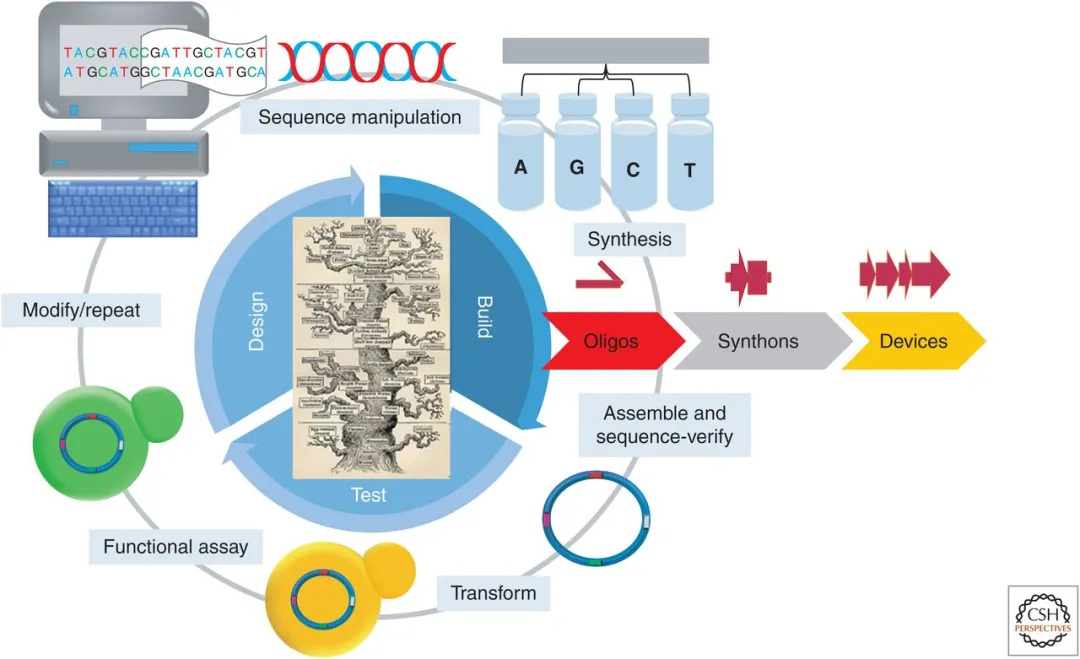
The fundamental principles and technical tools constitute the core of synthetic biology, enabling researchers to design and construct novel biological systems with customized functions. Key principles and technical approaches of synthetic biology are outlined as follows:
Fundamental Principles
1. Standardized Biological Parts: Synthetic biology standardizes biological components including DNA sequences, proteins and metabolic pathways into interchangeable modular units named BioBricks. These standardized parts can be combined and reused to assemble new biological systems.
2. Genetic Circuit Design: Genetic circuits refer to gene networks governing cellular behaviors in synthetic biology. Custom-built genetic circuits achieve precise regulation over cell functions, such as toggling gene expression and tuning the biosynthesis of metabolites.
3. Selection and Engineering of Chassis Cells: Chassis cells serve as host microbes or cells for synthetic biological design. Researchers select appropriate chassis strains and conduct genetic modification to endow new biological functions or boost the yield of target compounds.
4. Systems Biology and Computational Modeling: Systems biology facilitates comprehensive understanding of the integrity and complexity of biological systems. Computational modeling and simulation predict biological performance, optimize design schemes and carry out virtual trials prior to wet-lab experiments.
Technical Approaches
1. Gene Synthesis and Genome Editing: De novo gene synthesis enables full-length DNA construction from scratch, while editing tools such as CRISPR-Cas9 support accurate genomic modification of organisms.
2. DNA Assembly Technology: Multiple DNA fragments can be efficiently assembled into large gene constructs via PCR, homologous recombination, Golden Gate assembly and other methodologies.
3. High-throughput Screening and Sequencing: Automated high-throughput platforms rapidly verify the functionality of engineered biological constructs, and high-throughput sequencing validates and characterizes target genetic sequences.
4. Metabolic Engineering and Pathway Reconstruction: Metabolic engineering remodels native microbial metabolism to improve target product synthesis via upregulating key pathways, knocking out competing routes or introducing exogenous metabolic cascades.
5. Construction of Cell Factories: Integration of tailored genetic circuits and metabolic pathways into chassis cells establishes engineered cell factories for manufacturing pharmaceuticals, biofuels and other high-value chemicals.
6. Bioreactor and Fermentation Technology: Bioreactors maintain optimal culture environments for cell proliferation and product formation, and industrial fermentation realizes large-scale production of synthetic biology-derived commodities.
7. Biosafety and Bioethics: Research and industrialization of synthetic biology must abide by biosafety norms and ethical principles, covering lab safety management, prevention of biotech misuse, as well as public engagement and information transparency.
Collectively, these principles and technologies build a robust technical framework for designing functional artificial biosystems, driving innovative breakthroughs across pharmaceuticals, agriculture, energy and environmental industries. Continuous technical advancement will further expand the application boundaries of synthetic biology.
Source: Biobank
Original link:https://mp.weixin.qq.com/s/xwA5SxXZBZTDY5_eH7ycLw