As a golden key to decipher life and a disruptive technology reshaping the future, synthetic biology unlocks the pathway converting non-living substances into living materials. It enables rational design and editing of living systems, establishes a new research paradigm for life science, fuels iterative upgrades of biotechnology, and serves as a core driving force for the future bioindustry. Over more than two decades of development, synthetic biology has delivered successive breakthroughs, rolled out innovative industrial applications, and gradually matured into a complete academic discipline. Its evolutionary roadmap can be generalized into three major dimensions: first, successive innovations in enabling theories and core technologies; second, iterative improvements in whole-genome synthesis and DNA assembly capacity; third, construction and practical deployment of engineered cell factories and novel artificial biosystems. On this basis, this paper elaborates the disciplinary framework of synthetic biology and forecasts its future development trends.
Keywords: synthetic biology; engineering biology; enabling technology; genome editing; disciplinary system
For over 150 years, life science has undergone three successive revolutionary transformations, bringing profound shifts in research paradigms. The discipline has evolved from observational documentation of biological traits and heredity, to molecular-level characterization of vital processes, and further to omics-driven systematic biology, laying a solid academic foundation for the emergence of synthetic biology. In the past two decades, synthetic biology has achieved remarkable breakthroughs, realized scaled innovative applications, and steadily built up its integrated disciplinary architecture.
1 Connotation and Denotation of Synthetic Biology
Rooted in bioscience, synthetic biology converges chemistry, physics, informatics and other disciplines with core engineering principles to redesign native organisms or synthesize entirely new life forms. It fulfills two core missions: deciphering fundamental laws of life via life construction (construct-to-learn) and realizing engineered industrialization of biological resources (construct-to-apply), hence also termed engineering biology. Its connotation and application scope keep expanding, covering fundamental theories, enabling technologies and translational innovations, and boosting cross-disciplinary research advancement.
Evolving from life science, synthetic biology is closely linked to yet distinct from conventional biology. Traditional biology focuses on naturally occurring organisms, adopting observation, experimentation, data analysis and logical deduction with advanced instruments to collect biological datasets, verify biological hypotheses and explore essential life rules. Advances in modern technologies make systematic engineering transformation of living organisms feasible. Different from conventional biology’s focus on natural diversity, complexity and self-adaptation of life, synthetic biology borrows standardized, modular and programmable engineering principles to optimize and engineer organisms from bottom up. Spurred by advances in biological modeling & simulation, large-scale genome synthesis, next-generation gene editing, and especially booming artificial intelligence (AI) empowered biological design, enabling technologies of synthetic biology have experienced rapid progress. Its transformative values are widely demonstrated across biomedicine, industrial biotechnology, agricultural bioengineering, bioenergy, environmental remediation, biomaterials, bioelectronics and bioinformatics (Table 1).
Table 1 Differences and Connections between Synthetic Biology and Traditional Biotechnology
2 Developmental Evolution of Synthetic Biology
Over a century ago, French scientists put forward the concept of artificially synthesized cells and coined the term “synthetic biology” for the first time. In the mid-20th century, researchers from China and the United States successively achieved in vitro chemical synthesis of core biomacromolecules including DNA, RNA and proteins. In 1965, Chinese scientists completed total chemical synthesis of bovine insulin. In 1966, American researchers artificially manufactured polynucleotides. In 1981, Chinese scholars fully synthesized yeast alanine transfer RNA (tRNA), the first artificially prepared RNA with verified biological function, laying critical groundwork for later synthetic genomics. From the 1970s to 1980s, breakthroughs in molecular cloning and PCR popularized gene manipulation in microbiology and established foundational tools for rational gene design and regulation, though early genetic engineering was largely limited to gene cloning and heterologous expression with constrained application scope. Mid-1990s witnessed automated DNA sequencing and upgraded computational algorithms enabling full microbial genome sequencing; meanwhile high-throughput technologies generated massive datasets on cellular components and biomolecular interactions, providing novel insights into biological complexity. Integration of wet-lab experiments and computational analysis drove the rise of systems biology. Complementing the top-down research route of systems biology, researchers proposed a bottom-up engineering strategy, which was widely applied in molecular biology by the late 1990s and laid the disciplinary foundation for synthetic biology with intrinsic engineering attributes.
At the turn of the 21st century, synthetic biology entered a fast-growing phase and gained widespread global attention. Statistics retrieved from Web of Science using the keyword “synthetic biology” record nearly 20,000 peer-reviewed papers with steadily rising annual publications and constant landmark discoveries. Its developmental path is categorized into three core directions: first, breakthrough enabling technologies covering genetic circuit design, genome synthesis & assembly, precision genome editing, chassis cell construction, cell-free biocatalysis, de novo protein design, unnatural biological systems, bioorthogonal chemistry and AI-aided biological engineering; second, continuous upgrading of whole-genome synthesis capacity, with fully synthetic prokaryotic genomes and yeast chromosomes already accomplished and ongoing efforts toward synthetic chromosomes of multicellular organisms; third, construction and industrialization of cell factories and novel biosystems, covering two core goals of construct-to-learn (bottom-up assembly of life to decode biological principles) and construct-to-apply (commercialized production across biomedicine, agricultural biotechnology, industrial biochemistry, bioenergy, environmental remediation, biomaterials, bioelectronics and bioinformatics, Figure 1).
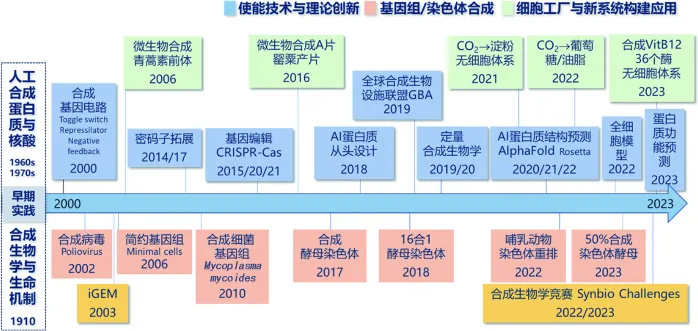
Figure 1 Evolution Roadmap of Synthetic Biology
2.1 Progress and Breakthroughs of Enabling Technologies
Enabling technologies refer to versatile innovations capable of upgrading conventional techniques and generating substantial economic and scientific benefits. Continuous breakthroughs in synthetic biology enabling technologies constitute the underlying technical backbone fueling the field’s explosive growth.
The successful construction of bistable genetic toggle switches and synthetic oscillatory gene networks verified the logical controllability and artificial reconstructability of complex metabolic regulation. By assembling standardized biological parts inside microbial chassis to build engineered genetic logic circuits, researchers introduced classic engineering design philosophies and kicked off the modern synthetic biology era. In 2000, Collins’ team at Boston University designed a bistable genetic toggle inspired by lambda phage repressor switch and cyanobacterial circadian oscillator, enabling engineered cells to toggle between two stable expression states responding to external signals; meanwhile Elowitz and Leibler at Princeton University developed a synthetic repressilator oscillatory circuit based on negative feedback, which triggers periodic, ordered cyclic expression of repressor proteins. These pioneering synthetic biodevices validated core design principles for synthetic gene regulation and genome editing and became milestone works of synthetic biology, followed by successive development of increasingly sophisticated artificial genetic circuits. The research group led by Lou Chunbo at SIAT-CAS and Ouyang Qi at Peking University have long focused on orthogonal and insulated genetic circuit design, developing high-performance biological parts to construct robust, predictable synthetic circuits in both prokaryotic and eukaryotic chassis. With advancing programmable circuit engineering, scientists can precisely regulate single-cell behaviors and even program synthetic microbial consortia via engineered gene networks.
Expansion of genetic codes, synthesis of proteins containing unnatural amino acids and development of mirror-image transcription have pioneered novel artificial life modalities with broad application prospects. In 2014, Romesberg’s group at Scripps Research created an unnatural base pair to expand canonical genetic alphabet, theoretically enabling infinite new life forms under controlled laboratory conditions. Three years later, the team realized in vivo transcription and translation of DNA carrying dNaM-dTPT3 unnatural base pairs inside E. coli with site-specific incorporation of unnatural amino acids into green fluorescent protein. Professor Chen Peng and Ji Xiong’s lab at Peking University established a single-amino-acid resolution multi-omics strategy based on genetic code expansion to decode dynamic chromatin modification in live cells, facilitating research on the core regulatory axis of metabolism-post-translational modification-gene transcription. Zhu Ting’s team at Tsinghua University pioneered mirror T7 transcription technology, advancing its diagnostic and therapeutic translational applications.
Rapid evolution of CRISPR-based genome editing, mining of modular genetic elements and in silico biological simulation continuously enrich foundational synthetic biology toolkits. Discovered in 2012 by Emmanuelle Charpentier and Jennifer Doudna, the programmable DNA-cutting CRISPR-Cas9 system laid the foundation for modern precision genome editing and earned the two scientists the 2020 Nobel Prize in Chemistry. In 2019, David Liu’s lab at Harvard University invented prime editors combining engineered reverse transcriptase and nickase nuclease to realize 12 types of base substitutions, small insertions and deletions in mammalian genomes. His research group also developed cytosine and adenine base editors enabling precise single-base modification without inducing double-stranded DNA breaks. Since 2019, CRISPR-associated transposon (CAST)-mediated site-specific DNA insertion technology has also achieved rapid development.
Computer-aided circuit design accelerates standardization, characterization and automation across synthetic biology workflows. In 2016, Christopher Voigt’s team at MIT published the Cello end-to-end CAD platform for automated genetic logic circuit construction in E. coli, streamlining DNA code design, assembly, modification and sharing under standardized engineering specifications. Voigt’s laboratory has contributed abundant part-design algorithms, well-curated component libraries and full functional characterization datasets for global synthetic biology community. Powered by high-performance computation, David Baker’s group at University of Washington achieved transformative progress in de novo rational protein design. In 2018, his team built a fully de novo designed β-barrel protein capable of specific high-affinity binding with DFHBI fluorophore; later researchers designed self-assembling helical protein filaments to explore native protein biomechanics and create unprecedented artificial biomaterials. Custom-designed protein nanomachines also support disease diagnosis and precise cellular manipulation, opening the era of tailor-made artificial transmembrane proteins for exclusive functional tasks. In early 2022, Zaida Luthey-Schulten’s group at UIUC built minimal in silico whole-cell models with streamlined regulatory proteins and RNAs to simulate core metabolic and genetic information processing inside living cells.
Artificial intelligence drastically expedites rational design workflows in synthetic biology. DeepMind’s AlphaFold series revolutionizes de novo protein design via accurate structure prediction and exemplifies the disruptive potential of data-driven life science research. DeepMind published original AlphaFold in Nature (2020) and upgraded AlphaFold2 with atomic-level structural precision in 2021; by 2022, AlphaFold had predicted over 214 million protein structures covering nearly all known proteomes on Earth. In the same year, Meta (formerly Facebook) released ESMFold, the largest protein language model so far, predicting more than 617 million protein sequences including millions of uncharacterized metagenomic proteins. Chinese research teams also make remarkable progress in AI-driven protein engineering: Wu Bian’s lab at Institute of Microbiology, CAS integrates computational protein design into industrial enzyme engineering; Liu Haiyan’s group at USTC develops innovative data-oriented de novo protein design pipelines; Lu Hua and Deng Minghua’s team at Peking University constructs graph neural network algorithms for automated protein function annotation via hierarchical structural feature extraction.
Quantitative correlation between biological network topology and physiological function derived from mathematic and physical modeling establishes core theoretical frameworks for rational synthetic circuit engineering. Two core fundamental scientific questions dominate synthetic biology research: revealing cross-scale emergent mechanisms of biological functions and enabling rational construction of synthetic life based on emergent rules, which drives the emerging field of quantitative synthetic biology. Chinese researchers formally proposed the concept of quantitative synthetic biology in 2019 and hosted the Xiangshan Science Conference themed Quantitative Synthetic Biology in 2021, reaching academic consensus on black-box AI modeling and multi-scale white-box quantitative theories. Ongoing improvement of synthetic biology theories provides essential theoretical guidance addressing core disciplinary puzzles.
2.2 Iterative Upgrading of Whole-Genome Synthesis and Assembly Technology
Continuous advances in de novo genome assembly have delivered fully synthetic prokaryotic genomes and yeast chromosomes, with ongoing attempts toward synthetic chromosomes of multicellular organisms, underpinning fundamental research and downstream industrial translation of synthetic biology.
Chemically synthetic viral, bacterial and yeast genomes mark landmark breakthroughs in artificial synthesis of hereditary materials, while minimal genome engineering brings novel strategies to decode genomic functions and build streamlined chassis cells. In 2002, Wimmer’s team at Stony Brook University chemically synthesized full-length poliovirus genome to generate infectious virions, the first entirely artificial living organism. Following the minimal cell concept, J. Craig Venter Institute (JCVI) published JCVI-syn1.0, the first cell controlled by fully synthetic genome in 2010; successive genomic truncation yielded streamlined JCVI-syn3.0 in 2016, a minimal cell surviving and proliferating with only 473 essential genes yet producing morphologically heterogeneous daughter cells. In 2021, JCVI researchers restored seven missing genes into syn3.0 genome to enable uniform spherical cell division, representing another milestone in synthetic genomics.
Synthetic genomics has expanded into eukaryotic research via the international Synthetic Yeast Genome Project (Sc2.0). Led by Prof. Jef Boeke at New York University, researchers constructed the first fully synthetic yeast chromosome (chromosome III, the smallest budding yeast chromosome) in 2014. By 2017, one-third of the Saccharomyces cerevisiae genome was successfully designed and synthesized, featured as a special issue by Science. In 2023, the Sc2.0 consortium finalized full chemical synthesis of all 16 native yeast chromosomes and generated 16 semi-synthetic yeast strains each carrying 15 natural plus one synthetic chromosome, reported as a cover story on Cell. Derivatives such as 16-in-1 and 16-in-2 fused-chromosome yeast strains open new avenues to uncover fundamental life mysteries.
After realizing synthetic genomes of prokaryotes and yeast chromosomes, scientists advance toward engineered chromosomes of multicellular eukaryotes. In 2022, Li Wei and Zhou Qi’s team at Institute of Zoology, CAS achieved programmable chromosomal fusion in mice and generated viable rodents with fully rearranged karyotypes. Combining haploid embryonic stem cells and CRISPR editing, researchers successfully linked mouse chromosome 1 with chromosome 2 in reverse orientation and fused chromosome 4 and 5 end-to-end without obvious physiological defects in treated animals, verifying that two independent mammalian chromosomes can be stably fused via non-homologous end joining after genomic modification. This research expands construct-to-learn applications of synthetic biology and establishes a robust technical platform for mammalian chromosome engineering.
2.3 Construction and Industrial Application of Cell Factories and Novel Biosystems
Breakthrough enabling technologies provide unprecedented tools to decipher life mechanisms and accelerate engineered commercialization of synthetic biology; upgraded genome synthesis capacity continuously fuels lab research and industrial transformation.
Successful heterologous biosynthesis of artemisinin precursors, opioids, cannabinoids and jasmonates in yeast demonstrates huge commercial potential for microbial production of rare plant-derived pharmaceuticals and phytohormones. In 2006, Jay Keasling’s group at UC Berkeley engineered yeast to produce artemisinin precursors, a landmark achievement for microbial synthesis of botanical medicines; later Keasling’s lab together with Researcher Luo Xiaozhou at SIAT-CAS constructed yeast strains synthesizing diverse cannabinoid derivatives and achieved full de novo biosynthesis of plant hormone jasmonic acid in Saccharomyces cerevisiae. Separately, Smolke’s team at Stanford engineered complete opioid biosynthesis inside yeast, which may reshape global opium poppy cultivation industry in the future.
Novel artificial pathways converting CO₂ into starch, glucose and triglycerides enable high-value resource utilization of greenhouse gas. In 2021, joint research from Tianjin Institute of Industrial Biotechnology and Dalian Institute of Chemical Physics, CAS created the artificial starch anabolic pathway (ASAP), accomplishing the first full laboratory-scale de novo synthesis of starch from carbon dioxide. In 2022, Xia Chuan’s group (UESTC), Yu Tao’s team (SIAT-CAS) and Zeng Jie’s lab (USTC) combined electrocatalysis and synthetic biosynthesis to convert CO₂ into high-titer acetic acid, which is further transformed into glucose and fatty acids via engineered microbial fermentation.
Cell-free in vitro synthesis of fine chemicals such as vitamin B12 overcomes multiple bottlenecks restricting whole-cell microbial fermentation. In 2023, Zhang Dawei’s research group at Tianjin Institute of Industrial Biotechnology split the native 24-step vitamin B12 biosynthetic route into modular catalytic segments and assembled an in vitro multi-enzyme cascade with 36 purified enzymes, establishing efficient cell-free systems producing vitamin B12 starting from 5-ALA or HBA feedstock.
Mass-scale biomanufacturing of bio-based feedstocks highlights synthetic biology’s capability to replace fossil-derived petrochemicals with green bioprocesses; emerging bioelectronic technologies including DNA data storage, bionanodevices and synthetic biosensors are gradually translated from conceptual designs into commercialized products. Globally distributed biofoundry infrastructures provide integrated automated platforms for high-throughput biosynthesis of hundreds to thousands of target molecules and accelerate industrial rollout of engineered cell factories. Synthetic biology applications rapidly expand across medicine, manufacturing, agriculture, energy, environmental governance and information industries, promoting high-efficiency development of global bioeconomy and delivering sustainable solutions addressing worldwide ecological challenges.
Furthermore, sustainable growth of synthetic biology relies on systematic cultivation of young talent. Launched in 2003, the International Genetically Engineered Machine (iGEM) Competition has nurtured generations of young scientists and numerous influential synthetic biology startups over three decades. China’s domestic Synbio Challenges, initiated in 2022, develops rapidly and steps toward internationalization, continuously cultivating interdisciplinary reserve talents for synthetic biology and frontier life sciences.
3 Gradual Formation of Integrated Synthetic Biology Disciplinary System
Decades of intensive progress have freed synthetic biology from excessive theoretical dependency on conventional engineering disciplines (Figure 1). Rational exploration of biological regulatory mechanisms, multi-disciplinary integration of systems biology, chemical biology, computer science and core engineering, plus persistent efforts from experts across genetics, genomics, metabolic engineering and biochemical engineering collectively drive the maturation of synthetic biology’s complete disciplinary architecture. Guided by fundamental theories, synthetic biology adopts bottom-up engineering methodologies to develop enabling technologies and resolve critical challenges of standardization and rational design for industrial biological applications; its integrated framework mainly covers core theories, enabling technologies and translational applications. Meanwhile, healthy industrialization requires coordinated improvements in supporting policies, ethical & legal supervision and popular science outreach for public engagement (Figure 2).
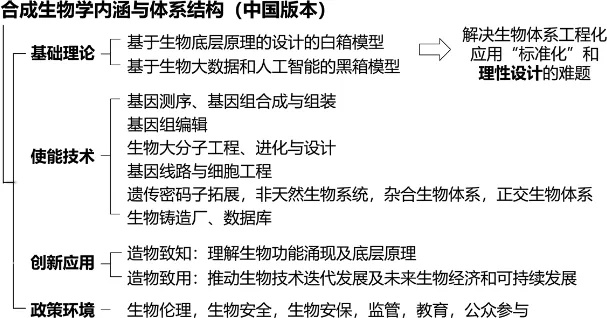
Figure 2 Framework of Synthetic Biology Disciplinary System
Core theoretical foundations of synthetic biology fall into two categories: quantitative biology-based white-box models built via component quantification and mathematical deduction driven by prior biological knowledge, and data-driven black-box models constructed by machine learning statistics over massive biological datasets. White-box modeling enables gradual systematic complexity increment, while black-box AI modeling extracts implicit biological correlations directly from existing experimental datasets.
Core enabling technologies include DNA sequencing, whole-genome synthesis & assembly, next-generation genome editing, rational protein engineering (macromolecule design & directed evolution), synthetic genetic circuit & chassis cell engineering, cell-free biocatalysis, multicellular consortia engineering, unnatural genetic code expansion and bioorthogonal hybrid biological systems. Besides, automated biofoundry platforms and standardized part information repositories play increasingly essential roles in advancing the whole field.
Translational applications are defined by the dual goals of construct-to-learn and construct-to-apply. Construct-to-learn aims to build minimal artificial life systems (such as fully synthetic minimal cells) to uncover emergent biological functions and underlying molecular mechanisms; construct-to-apply focuses on industrialized biotechnology innovation to boost sustainable global bioeconomy, covering industrial biomanufacturing, precision biomedicine, synthetic agricultural food, environmental bioremediation, bioinformatics & biosensing and extraterrestrial synthetic biology research.
Sound policy and regulatory frameworks are indispensable for sustainable synthetic biology development. Parallel with technological and industrial expansion, stakeholders must systematically address bioethics, biosafety, biosecurity, governmental regulation, discipline education and public science communication. In short, popular science education, ethical review and regulatory legislation progress alongside technological breakthroughs to mitigate potential risks and safeguard healthy development of synthetic biology. Driven by continuous advances across theory, core technology and industrial translation, synthetic biology’s disciplinary system will keep refining and maturing over time.
4 Conclusion and Future Outlook
Progressive life science innovations continuously promote social advancement. By constructing tailor-made artificial biosystems, synthetic biology facilitates fundamental life exploration and practical human-oriented industrialization, bearing great theoretical and industrial significance for modern life sciences and biotechnology. Its evolving disciplinary framework not only triggers revolutionary upgrades in bioengineering applications but also unlocks unprecedented opportunities for basic life science research. Nevertheless, multiple critical challenges remain unresolved, including full in silico cell simulation, de novo artificial cell construction, real-time biosensing, deep-learning assisted DNA design, dynamically programmable synthetic genomes, synthetic multicellular consortia and purpose-built organisms toward circular sustainable manufacturing, requiring successive theoretical and technical breakthroughs.
Future advancement of synthetic biology will be fueled by multiple transformative drivers. First, ongoing fundamental life science discoveries deepen our understanding of biological complexity and lay solid groundwork for disruptive synthetic biology innovation. Second, refined quantitative synthetic biology theories strengthen mechanistic interpretation of life rules and guide both construct-to-learn basic research and construct-to-apply industrial development. Third, iterative optimization of foundational toolkits and general-purpose enabling technologies allows more precise, efficient engineering of artificial life. Last but not least, AI-empowered synthetic biology will reshape the entire industry by drastically accelerating the speed, precision and scalability of biological design, bringing transformative opportunities spanning personalized precision medicine to low-carbon sustainable biomanufacturing and eventually forming an interconnected ecosystem of theoretical breakthrough, technological innovation and industrial value creation.
This paper was published on China Biotechnology, Issue 1, 2024.
Li Yujuan, Fu Xiongfei, Zhang Xian'en. An Overview of the Development Evolution of Synthetic Biology[J]. China Biotechnology, 2024, 44(1):52-60.
doi:10.13523/j.cb.2312105
Original link:https://mp.weixin.qq.com/s/a9i65NB0D0T3FHtk373MKA